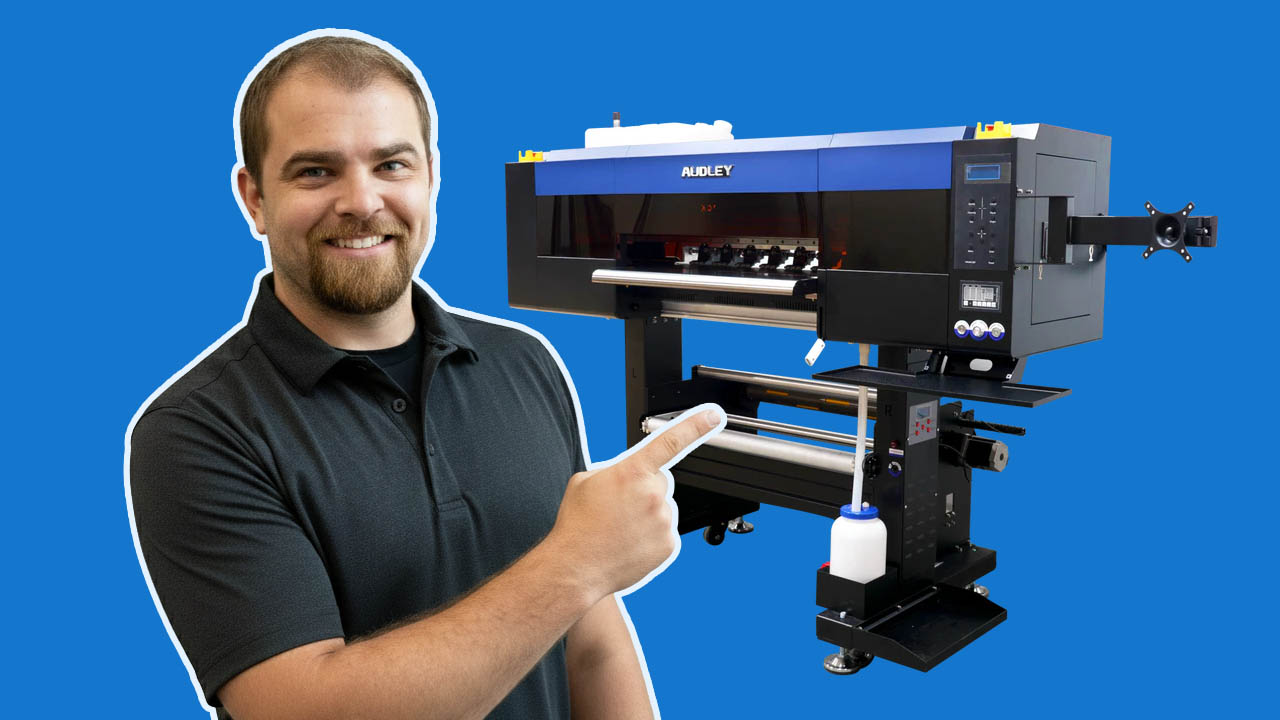
The Audley 6 Printhead DTF Printer is a 24 inch (60cm) DTF system built for higher output, paired with the DTF-60 powder shaker to keep printing, powdering, and curing moving at the same pace. This article takes a neutral look at its six-printhead setup, claimed real-world speed, curing and filtration features, and the ownership factors that affect daily production.
If you are scaling DTF volume, pairing faster equipment with DecoNetwork can support business growth by keeping quotes, order details, artwork approvals, and production scheduling in one place as output increases.
What The Audley 6 Printhead DTF Printer Includes
The Audley package is a 24 inch (60cm) DTF printer and shaker combo built to keep film moving from print to finished transfer without a slow cure stage.
Audley 6 Printhead 24in (60cm) DTF Printer
- Printhead setup: six Epson i3200-class printheads
- Ink: CMYK
- Speed claim: about 330 sq ft per hour aimed at sellable output
- Goal: higher daily transfer volume with fewer delays between jobs
DTF-60 Powder Shaker (ADL07K10)
- Role: powder application + curing that can keep up with higher print output
- Heating: 13-tube heating system with adjustable curing zones
- Control: PLC system for stable speed and temperature control
- Automation: powder recycling to reduce handling and waste
- Air management: built-in purification with multi-stage filtration
- Fit: described as compatible with both six-head and four-head Oddly/Audley setups
What the combo is meant to solve
A fast DTF printer does not help if curing lags behind. This setup is built to match printer speed with shaker capacity so output stays steady and predictable.
Audley 6 Printhead DTF Printer Performance and Print Quality
The Audley 6 printhead DTF printer is positioned for real output, how to judge speed claims, and what impacts print quality, hand feel, and durability when you push higher volume.
Speed that matches paid work
What “sellable quality” depends on
At higher speed, small issues scale into big waste. Watch for:
- banding or grain in gradients
- weak edges and fine detail loss
- uneven density across the film
- cure problems that show up after pressing
This is why the shaker matters. If curing is uneven, transfers can crack, lift, or fail in wash even when they look fine at first.
Hand feel and white use
The samples shown lean toward a softer feel, not a thick block of ink. Less white under the design can improve feel, but it can also reduce opacity on dark shirts. Shops usually set this per job based on artwork and garment color.
CMYK vs expanded gamut
This setup is CMYK. Expanded gamut can help some colors, but many shops pick DTF equipment based on speed, repeatability, and cost per print. If output is steady and cure is solid, CMYK can cover most daily work.
Film and peel workflow
Film behavior affects cycle time. A fast hot-peel style workflow can reduce waiting and keep finishing moving. The test is simple: run your own art, press it, then check feel, stretch, and wash results.
Inside the DTF-60 Shaker (Curing, Control, and Air Management)
The shaker is the pace setter. If curing and powder control fall behind, print speed stops mattering.
13-tube heating and curing zones
The DTF-60 uses a 13-tube heating system with adjustable curing zones. The aim is even heat across the film so adhesive cures the same from edge to edge. Even cure helps avoid brittle transfers, weak bonding, and film warping.
PLC control and powder recycling
A PLC control system manages speed and temperature settings. Stable control matters because small changes can shift cure results across a full roll. The unit also lists powder recycling, which can cut waste and reduce handling.
Film transport and media stability
Several features focus on keeping film straight and moving at a steady rate:
- pinch rollers to reduce drift
- mesh belt conveyor for smooth transport
- ink station design aimed at steady delivery and fewer stops
Stable transport reduces skew, clumps, and uneven cure bands.
Filtration and air purification
DTF powder can hang in the air and settle on equipment. This system includes air purification and multi-stage filtration (including cloth and charcoal filters) to reduce haze and powder escape. Cleaner air also means less buildup on film and parts.
Why this matters at high output
At higher speed, cure issues become expensive. A shaker built to match printer output helps keep jobs moving while protecting quality.
Ownership Notes for the Audley 6 Printhead DTF Printer
Specs matter less than daily use. This section covers what affects results, uptime, and cost per print.
RIP software and setup time
This package is sold with Flexi. Another RIP option is mentioned as easy to learn. When you compare RIP workflows, focus on white control, choke, profiles, and how fast an operator can go from file to print without errors.
Shop conditions: humidity, heat, and ink flow
DTF output shifts with the room. The discussion points to a working range around 40 to 70 percent humidity, with a note that printing below the low end can cause issues. Cold mornings can thicken ink and slow flow. A damper heating option is meant to help ink reach a stable state sooner, which can reduce early-run defects.
Consumables and planning inputs
The numbers shared are:
- ink: $30 per liter
- film: $62 per roll
Use these as inputs, not final cost. Add powder use, cleaning supplies, test prints, maintenance time, and reprints. The best check is running your own art at your own settings and tracking usable yield.
Pricing and what “all in” means
The pricing shared includes:
- MSRP: $24,500
- show special: $19,995 through a dealer offer tied to the event
Before you buy, confirm what is included: install, training, warranty terms, parts, and service response time.
Who this combo fits
This setup fits shops that:
- need a 24 inch, six printhead DTF printer for higher daily output
- want a shaker that can keep up at speed
- care about cure control and air management
- are moving up from smaller DTF systems and want fewer bottlenecks
The Takeaway: Audley 6 Printhead DTF Printer
The Audley 6 Printhead DTF Printer is built for higher output, but the result depends on the full line. The DTF-60 shaker is meant to match printer speed with stable film transport, even curing through a 13-tube system, and better powder control through PLC settings and filtration.
If you are considering this combo, test it with your own files. Check edge detail, opacity, hand feel, stretch, and wash results at the settings you would run for paid jobs. When output increases, workflow becomes the limiter. Pairing higher-volume DTF production with DecoNetwork can support business growth by keeping quotes, order details, artwork approvals, and production scheduling organized in one system.