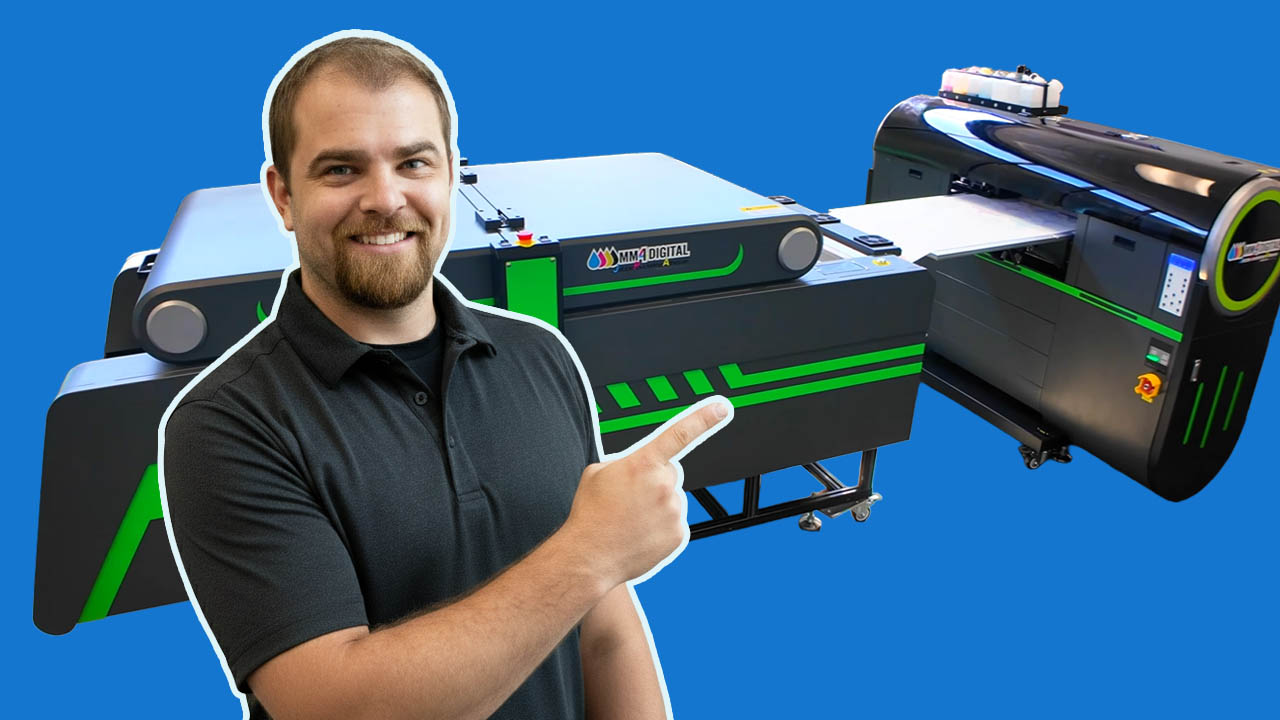
DTF printing keeps changing, and one of the biggest shifts is the move toward cleaner production and softer transfers. That is why the MM4 Digital DTF Printer stands out. Instead of depending only on powder, this system can also use liquid adhesive as part of the print process.
That changes how the transfer is made, cured, and maintained. It also gives DTF shops a different way to think about print quality, hand feel, and shop cleanup. The main question is not whether the system can produce consistent results in real production.
This article takes a simple technical look at the MM4 Digital DTF Printer, including how it works, what makes it different, and what shops should consider before adding this type of system. It also connects to the bigger workflow picture, because tools like DecoNetwork still help keep orders, artwork, and production organized around the printer.
What Makes The MM4 Digital DTF Printer Different
The MM4 Digital DTF Printer is different because it does not rely only on the standard powder-based DTF process. It is a hybrid system that can use powder or liquid adhesive. In the setup shown at the expo, the liquid adhesive is applied through printheads instead of being added later with a powder shaker.
The printer uses five Epson i3200 printheads. One handles CMYK, two handle white ink, and two handle the liquid adhesive. That printhead layout is the main technical difference. The adhesive becomes part of the print process instead of a separate step after printing.
This changes both the workflow and the final transfer. A powderless setup can reduce loose powder in the shop, lower surface mess, and create a softer print feel. It can also help with fine detail. For DTF shops, the MM4 Digital DTF Printer is not just another printer. It is a different method for building the transfer from the start.
Print Process And Curing For The MM4 Digital DTF Printer
The MM4 Digital DTF Printer uses a staged curing process. Heat comes from the plate under the film, while a cooling unit works from above. After that, the transfer moves through a tunnel to finish curing. This means the ink and adhesive are set in steps instead of all at once.
That process is important in a powderless setup. Since the machine is not using a powder shaker in this mode, the curing path has to do more of the work. The goal is to keep the print stable, cure the adhesive correctly, and hold detail across the design.
In the demo, the printer was running at about 54 square feet per hour. It also showed strong color, fine detail, and a softer hand feel than standard powder-based DTF. Another clear difference is the work area. Without loose powder, there is less dust on nearby surfaces and less cleanup around the machine.
Maintenance For The MM4 Digital DTF Printer
The MM4 Digital DTF Printer may remove powder from the process, but it still needs regular maintenance. The liquid adhesive requires cleaning and routine care. In the interview, Raphael explained that the machine needs a little more cleaning, but regular daily or weekly maintenance should help prevent issues.
The printer uses Epson i3200 printheads for CMYK, white, and adhesive. That makes head care important. One of the main concerns with powderless DTF is clogging, so the adhesive has to be made for the printheads and the system has to be maintained correctly.
Shops also need to think about setup. This machine runs on 220V power, so it may need extra planning before installation. The bigger question is whether the printer can stay consistent over time, not just look good in a demo. For DTF shops, that means judging the machine by maintenance needs, stability, power requirements, and how well it fits into the full production workflow.
The Takeaway For The MM4 Digital DTF Printer
The MM4 Digital DTF Printer shows a different way to produce DTF transfers. Its hybrid design, liquid adhesive system, and staged curing process set it apart from standard powder-based workflows. The main advantages are a cleaner process, softer hand feel, and strong detail.
At the same time, powderless DTF still depends on good maintenance, stable curing, and consistent output. Those are the areas shops need to judge most. For DTF businesses, the MM4 Digital DTF Printer is less about novelty and more about whether this method can perform in real production. And as print technology improves, platforms like DecoNetwork still matter for keeping quotes, orders, artwork, and production organized around the printer.