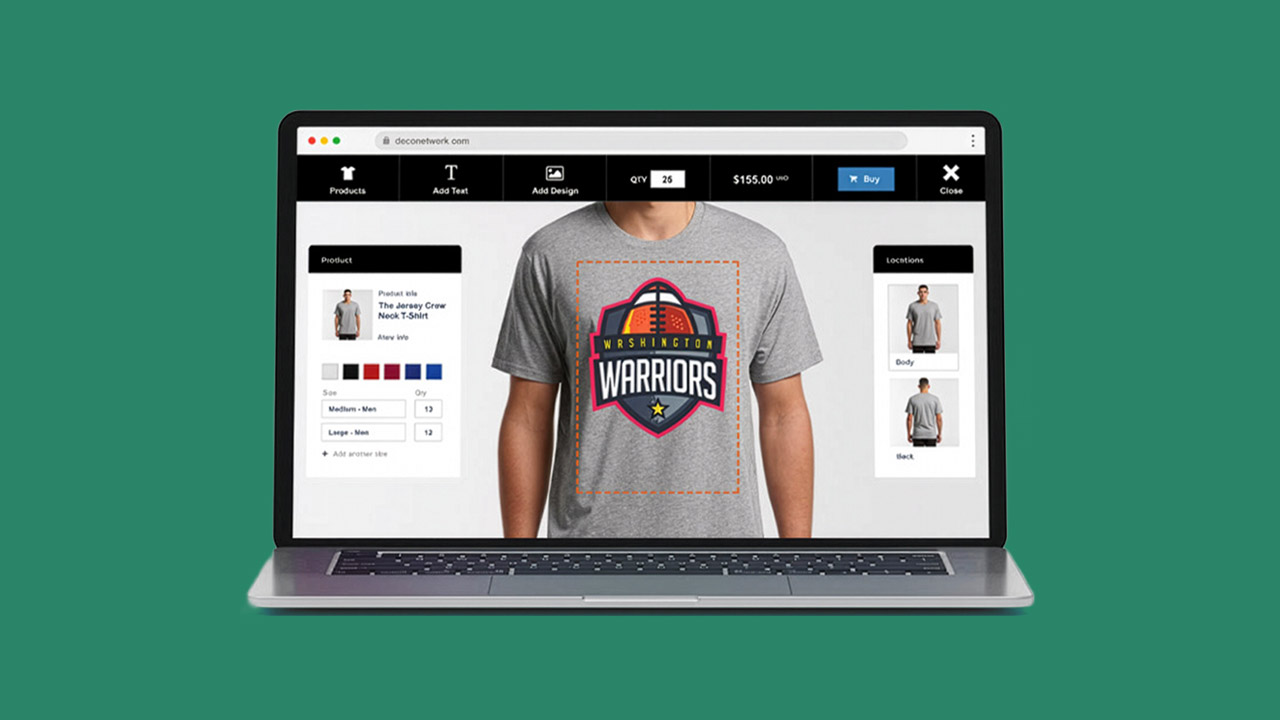
We explore the top reasons decorators move from Shopify to DecoNetwork, focusing on what Shopify typically cannot solve for screen printing, embroidery, DTF, and DTG shops: production-ready order capture, a real artwork approval workflow, and production management that connects scheduling and status to the order. The goal is simple: fewer mistakes, faster turnaround, and more capacity for business growth.
Shopify is a strong ecommerce platform, but it was not designed for the reality of decorated apparel. A print shop order is not just a product and a payment. It includes decoration choices, placement, personalization, artwork versions, approvals, due dates, and production steps that have to stay accurate from checkout to delivery.
When Shopify is the front end, many garment decorators build the real workflow somewhere else: apps to collect details, email to approve art, spreadsheets to schedule production, and constant follow-up to fill in missing information. The website still feels like it is holding the business back because every order creates admin work before production can even start.
Reason #1: Shopify Doesn't Collect Production-Ready Decoration Details
Shopify is built to sell products. Decorated apparel orders need more than a product, size, and shipping address. They need structured job information that production can trust.
Where Shopify-based custom apparel checkout typically falls short:
- Decoration method and placement (left chest vs full front vs sleeve, multiple locations)
- Personalization fields (names, numbers, departments, roster uploads)
- Artwork context (which logo goes where, correct version, special instructions)
- Fulfillment rules (bagging by name, packing by size, split deliveries, drop ship needs)
When those details are missing or captured loosely in notes, your team spends time doing cleanup: chasing customers, interpreting instructions, and correcting preventable mistakes.
How DecoNetwork helps: DecoNetwork online stores are designed for garment decorators, so the store captures order details in a structured way that matches how jobs are produced. The outcome is cleaner orders with less back-and-forth.

Reason #2: Decoration-Based pricing Is Hard To Model In Shopify
Decorated pricing is not simple retail pricing. It changes based on quantity, decoration method, number of print locations, setups, add-ons like names and numbers, and embroidery variables like stitch count and thread colors.
In Shopify, many shops try to solve this with combinations of:
- many variants and duplicate products
- custom product options apps
- manual quotes outside the cart
- hidden line items or post-checkout invoices
The issue is not effort. It is that Shopify’s core product and pricing structure does not naturally support pricing matrices for screen printing, embroidery, DTF, and DTG. The more you patch, the more fragile the checkout becomes, and the easier it is for customers to choose the wrong option or for the shop to miss margin-critical add-ons.
How DecoNetwork helps: DecoNetwork is built around decorated workflows, so decoration options and pricing logic are structured to match how print shops sell. That reduces pricing confusion, protects margin, and speeds up order processing.
Reason #3: Shopify Doesn’t Manage Artwork Approvals
In a garment decoration shop, the “order” is not production-ready until the artwork is approved. Shopify does not run an artwork approval workflow for print shops, so approvals usually happen across email threads, shared links, screenshots, and verbal confirmations. That creates version drift.
What commonly goes wrong in a Shopify-based approval process:
- The customer approves a proof, but the approval is not tied to the exact order line item
- Comments get buried, so changes are missed
- A newer file exists, but production prints an older version
- Sales and production do not have the same view of what was approved and when
Why this becomes expensive:
- wrong logo version or placement
- missed personalization edits on team orders
- reprints, rush shipping, and discounts that cut profit
- schedule disruption because problems are found too late
How DecoNetwork helps: DecoNetwork treats approvals as part of the order workflow. Proofs, comments, and approvals are connected to the job, so your team can see what is pending, what is approved, and what is safe to produce. That reduces preventable mistakes and keeps turnaround time predictable.

Reason #4: Shopify Is Not Print Shop Production Management
Shopify can tell you an order was placed and paid. It cannot run the steps that actually determine whether a decorated order ships on time: artwork approved, blanks received, job staged, production scheduled, and finishing completed. That is why shops using Shopify often feel like the website is holding them back even when sales are coming in.
Where Shopify falls short for print shop production management:
- No production stages that match real shop flow (art, digitizing, print, sew, pack, ship)
- No production calendar tied to due dates and capacity
- No single view for job readiness (what is blocked vs ready to run)
- Status updates live outside the order in spreadsheets, whiteboards, or task apps
So the business runs on two systems:
- Shopify for taking orders
- Everything else for producing orders
That split creates constant admin work. Someone has to translate every order into production tasks, chase missing details, and manually keep teams aligned.
How DecoNetwork helps: DecoNetwork is built as production management software for custom apparel, so the online store and the production workflow connect. Orders move through clear job stages, scheduling reflects what is actually ready, and the shop floor has a reliable status system that is tied to the order.
The business growth impact is less coordination time, fewer preventable mistakes, and more capacity to take on work without adding chaos. When production management is built into the same platform as your online store, you stop managing the gaps and start running the shop.
Reason #5: Shopify Makes Reorders And Team Stores Hard To Scale
Most garment decorators grow through repeat programs: team uniforms, school spiritwear, corporate apparel, clubs, and seasonal drops. Shopify can host a store, but it is not designed for the repeat ordering patterns decorators deal with, especially when personalization and sorting matter.
Common Shopify pain points for team stores and reorders:
- Customers re-enter details every time, increasing mistakes
- Names and numbers are inconsistent across orders
- Roster-based ordering is clunky without extra tools and manual oversight
- Packing and sorting rules are not captured cleanly, so the shop fixes it after checkout
- More support questions because the order process is not tailored to decorated apparel
How DecoNetwork helps: DecoNetwork online stores are built for decorators, so repeat orders can follow a cleaner structure. When personalization fields, decoration options, and order details are set up for production from the start, reorders come in with less friction and fewer clarifications. That is how a one-time order becomes an ongoing uniform program that is easier to manage and more profitable to run.
The Takeaway: It's Time To Move From Shopify To DecoNetwork
If your Shopify store forces your team to clean up orders before they can produce them, the store is not just a website, it is a workflow bottleneck. Decorators move from Shopify to DecoNetwork because Shopify is not built for production-ready order capture, artwork approvals, or production scheduling for custom apparel orders. DecoNetwork connects online stores and production management in one system, which reduces preventable mistakes, cuts admin time, and creates real capacity for business growth.