
Add DecoNetwork as a preferred source for industry insights.
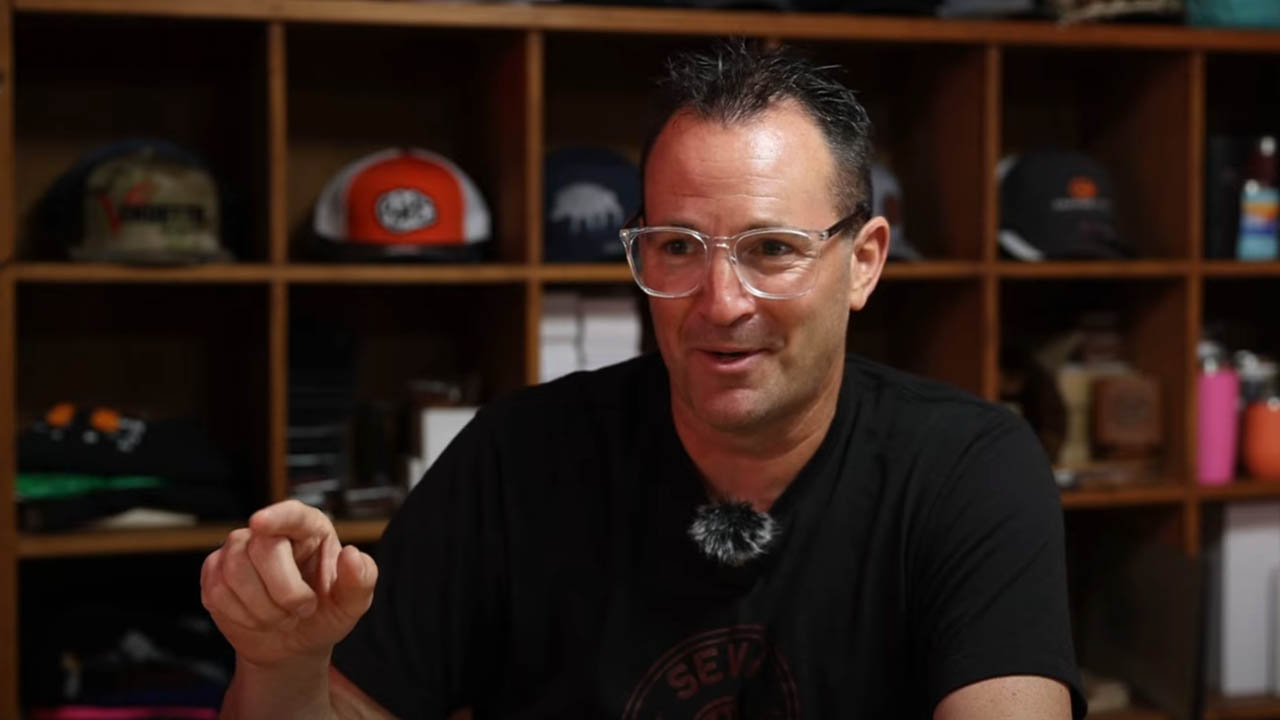
DTF may dominate transfer conversations today, but Brian Peterson’s father was making T-shirt transfers decades before digital transfer printing existed.
At Roach Studios in Columbus, Ohio, that history stretches back to the 1960s. Brian’s father began making iron-ons in California around 1964 before joining the operation that became Roach Studios.
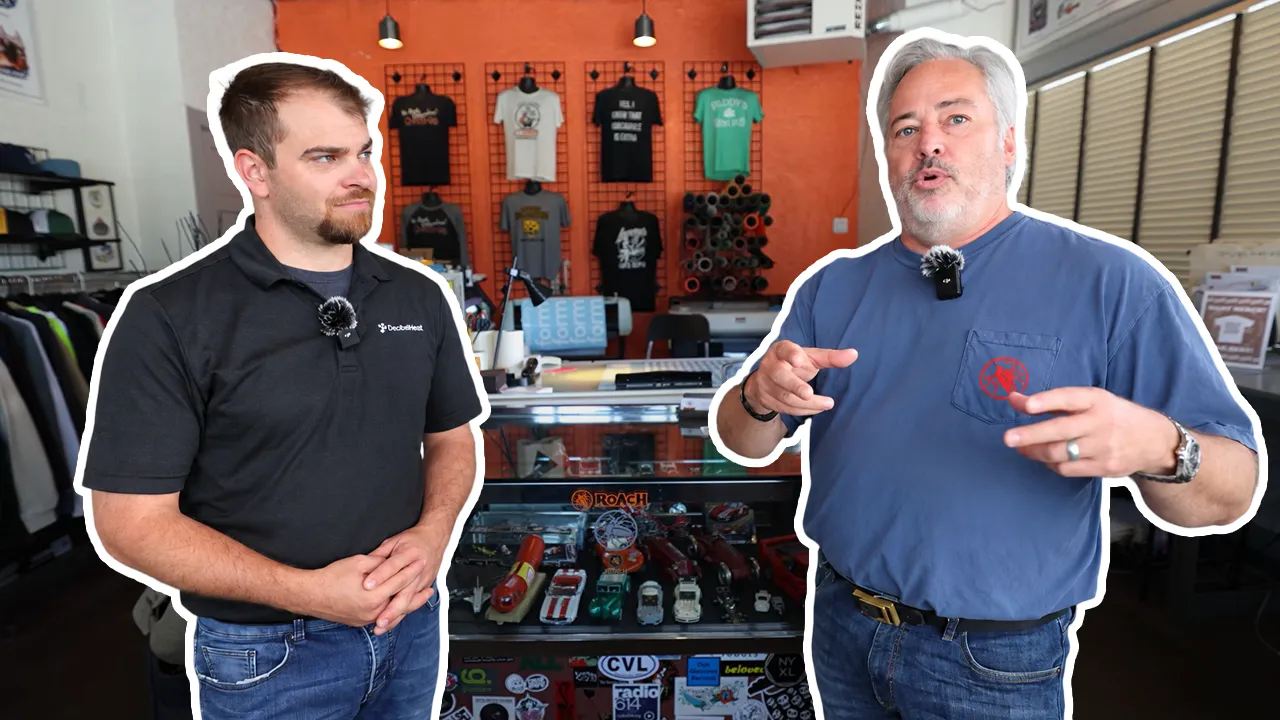
In the video, Brian walks through a shop where decades of transfer-printing experience now sit alongside DTF, direct screen printing, and other modern decoration methods.
How Roach Studios Helped Pioneer T-Shirt Transfers
Long before modern print-on-demand became common, Roach Studios was using transfers to solve a familiar inventory problem.
Instead of producing every design on every possible shirt size, style, and color in advance, retailers could stock blank garments and apply an iron-on when the customer placed an order.
That gave sellers more flexibility without carrying as much finished inventory.
The model grew quickly. Brian explains that by 1978, Roach was producing around 100 million graphics per year and generating about $24 million in gross sales.
The equipment and processes have changed considerably since then, but the basic idea is still familiar. Decorators can produce closer to demand instead of guessing what customers may buy.
Why Plastisol Transfers Still Work In A Modern Print Shop
Roach Studios may have deep roots in traditional transfers, but the shop has not ignored newer technology.
Plastisol transfers are screen printed onto transfer paper and later heat applied to a garment. Inside the shop, Brian and Zach show why that process still has practical uses.
Certain spot-color designs, puff effects, and other specialty applications can make plastisol transfers a strong option. Multiple smaller graphics can also be arranged on one transfer sheet for different garment locations.
DTF has expanded what decorators can produce, but it has not made every older method irrelevant.
A newer process is not automatically the better process for every job.
Plastisol, DTF Or Screen Printing? Use The Right Tool
Plastisol transfers, DTF, and direct screen printing each work best for different jobs. Quantity, artwork, color count, print size, special effects, and setup requirements all influence the best choice.
DTF can make sense for detailed, full-color, and lower-volume work. Plastisol transfers can work well for certain spot-color and special-effect applications.
Direct screen printing becomes especially efficient when the order is large enough to justify the setup. Brian explains that once those setup costs are covered, the cost per shirt can become much lower.
Roach also works with other decoration methods when the job calls for them.
The bigger lesson: start with what the customer needs, then choose the process that makes the most sense.
Old-School Printing Still Has A Place In A Modern Shop
Roach Studios has moved from early iron-ons and traditional screen printing into DTF and other newer processes without abandoning methods that still work.
Having more production options gives decorators more ways to match the artwork, quantity, garment, budget, and customer expectations to the right process.
Brian also uses DecoNetwork to help manage quoting, decoration methods, customer communication, production information, and orders across those workflows.
The technology may keep changing, but the goal stays the same: find the right way to produce a great product.