
Add DecoNetwork as a preferred source for industry insights.
Stakes Manufacturing operates a 140,000-square-foot print-on-demand facility inside a former Walmart near Cleveland, Ohio. The building gets your attention, but the operation inside it is what makes the story interesting.
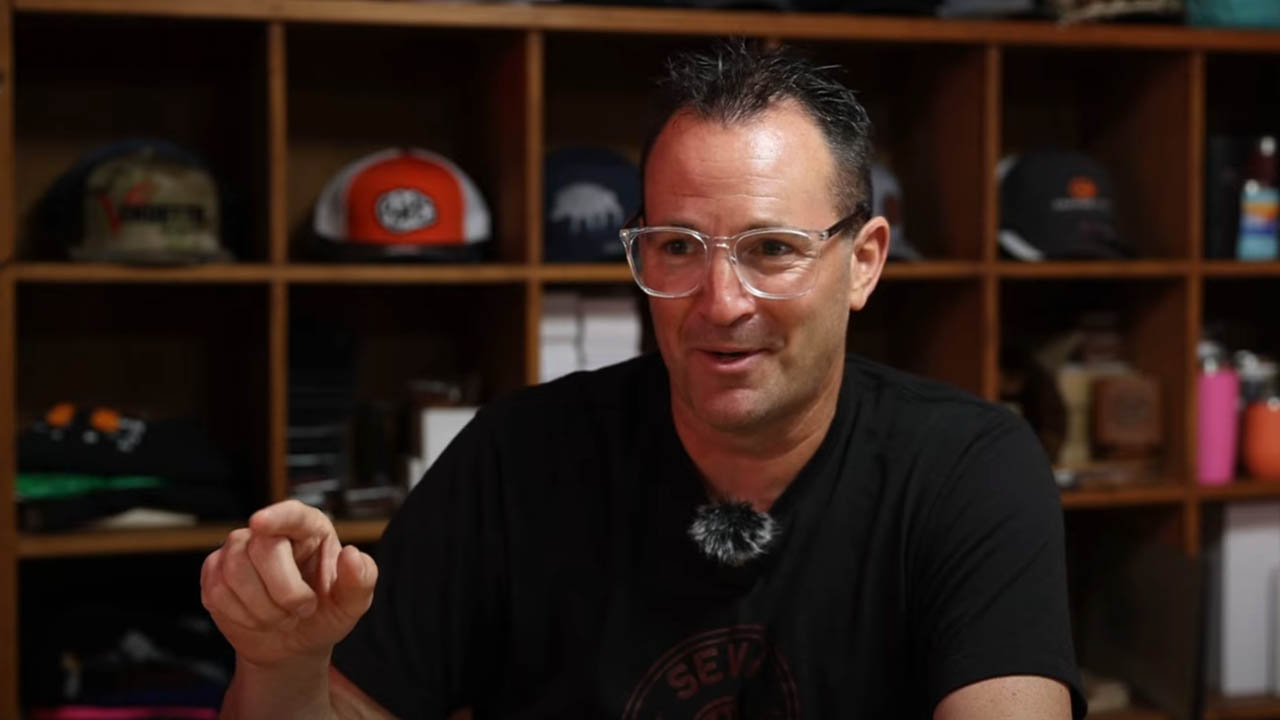
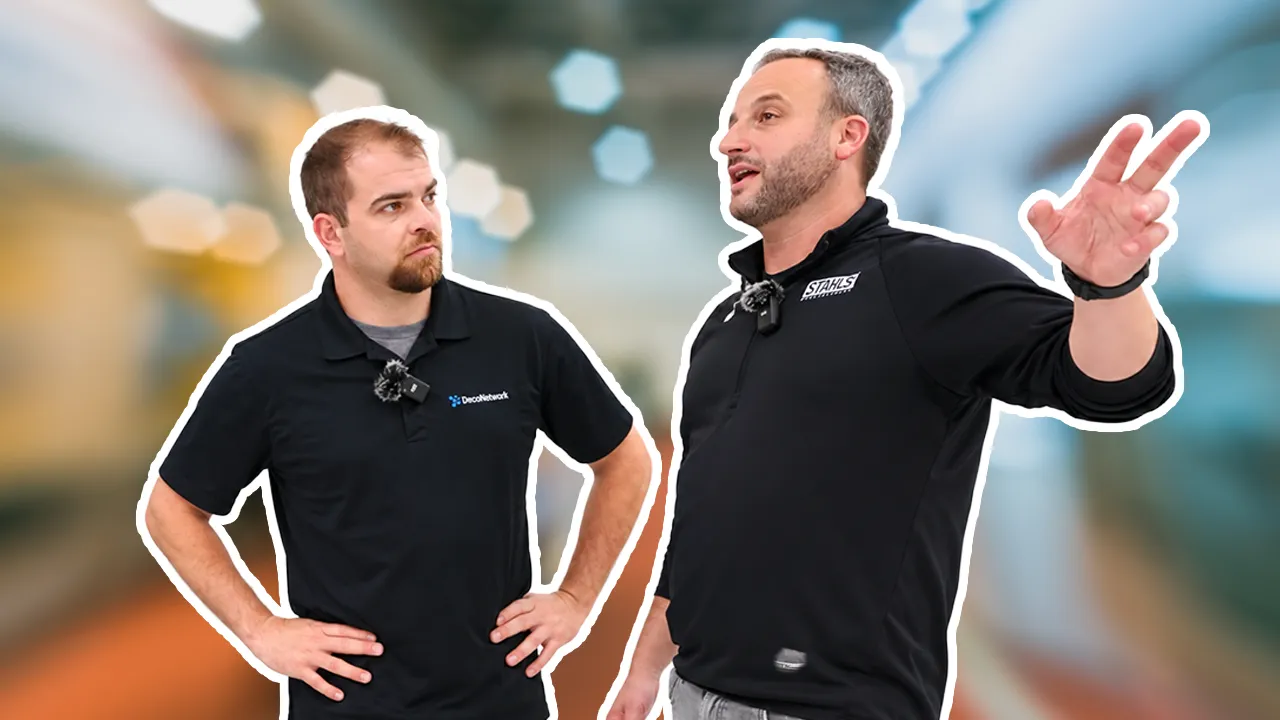
Stakes Manufacturing brings together digital printing, just-in-time inventory, automation, fulfilment, and an inclusive workforce under one roof. In a behind-the-scenes tour, Jed Seifert explains how those parts work together to support a large print-on-demand operation.
How Stakes Manufacturing Turned A Walmart Into A Print-On-Demand Facility
Stakes Manufacturing officially became a business in 2019 after operating through an earlier partnership. At the time, the company occupied about 20,000 square feet of the former Walmart. It has since expanded through the 140,000-square-foot building.
The business supports both direct-to-consumer ecommerce fulfilment and wholesale production for brands, print shops, and other businesses.
Operating at that size takes more than adding printing equipment. Large volumes of individual orders still have to move through garments, artwork, production, quality control, finishing, packaging, and shipping efficiently.
A larger building helps. The systems inside it matter even more.
How Stakes Uses Technology To Keep Print-On-Demand Moving
Stakes Manufacturing says it can offer more than 125,000 SKUs that it does not physically stock. Supplier integrations and dedicated deliveries allow garments to arrive as orders require them instead of forcing Stakes to warehouse every available style, colour, and size.
Production then moves through a mix of DTG and DTF printing. The method can depend on the garment and customer requirements, with some customers preferring one process and others allowing Stakes to choose.
The scale of the operation adds another challenge. Stakes says much of its production runs seven days a week and close to 24 hours a day, making consistent workflows and equipment uptime especially important.
Automation is also a major focus. Stakes is adding systems around cutting, pressing, carousels, and material movement to reduce manual work and keep production moving as volume grows.
Scaling print-on-demand requires improving the systems around the printers, not simply adding more equipment.
Why Disability Inclusion Is Central To Stakes Manufacturing
Technology is only part of the Stakes Manufacturing story.
Disability inclusion has been part of the company’s approach from the beginning. In the video, Seifert explains that his brother has Fragile X and that gaining meaningful employment changed his life and gave him greater independence. That experience helped shape how Stakes approached hiring as the business grew.
Around 10% of the workforce discussed in the video has intellectual or developmental disabilities. Stakes also works with a local school system on a school-to-work transition program where students receive work experience, mentoring, and the opportunity to move into employment when it is a good fit.
The company has also encouraged other printers to explore similar programs, making disability inclusion part of a broader conversation across the printing industry.
What Stands Out About Stakes Manufacturing
The former Walmart makes Stakes Manufacturing visually impressive, but what stands out most is how the business connects supplier relationships, inventory, digital printing, automation, fulfilment, and workforce development into one operating model. The same principle applies to the software side of a growing print shop, where DecoNetwork helps connect sales, orders, artwork, production, and fulfilment in one workflow.
Watch the full Stakes Manufacturing shop tour to see how the company approaches print-on-demand production, automation, growth, and inclusion inside its former Walmart facility.