
Add DecoNetwork as a preferred source for industry insights.
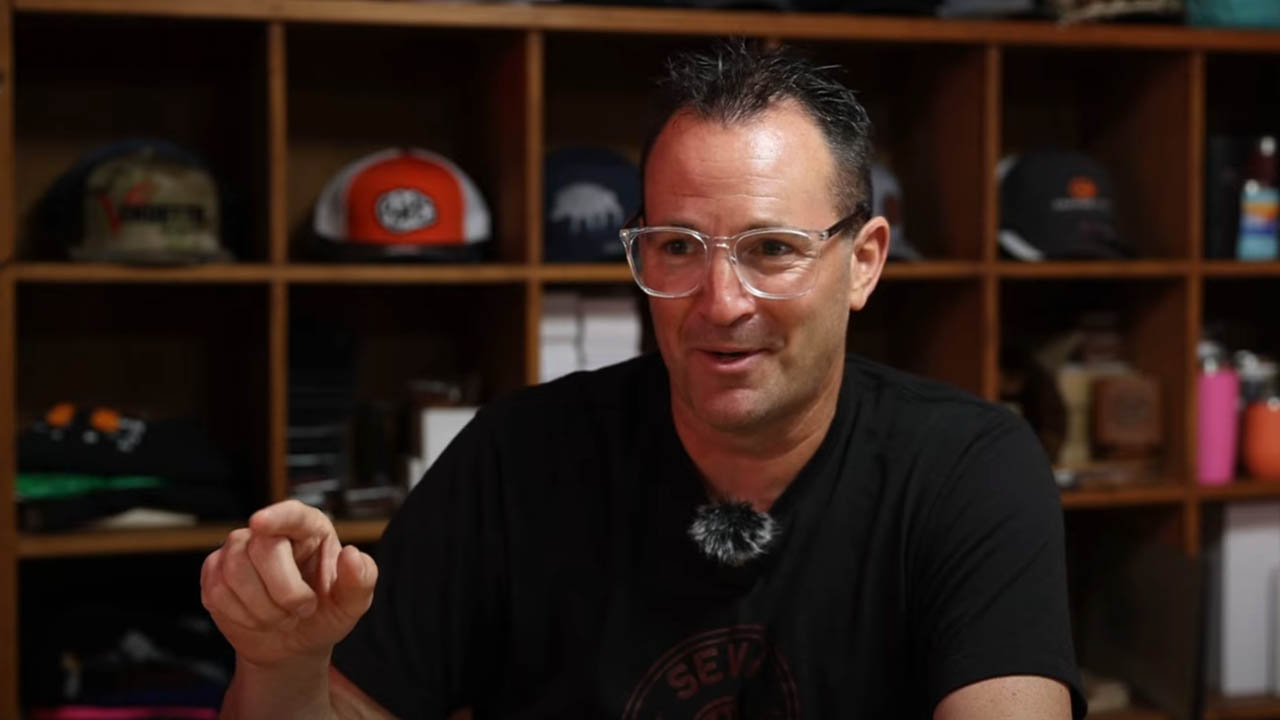
John Anton started selling printed T-shirts in 1985 after getting fired from his job. He initially outsourced the printing, then decided to learn screen printing and start a print shop himself.
More than 40 years later, one lesson still shapes his advice for anyone looking to start a print shop: understand how the business works before you depend on someone else to run it.
“You don’t know what you don’t know,” Anton says.
That applies to printing, curing, quality control, pricing, technology, and finding customers. Here are 10 lessons from his experience that new screen printing and custom apparel businesses can apply today.
1. Learn How to Screen Print Before You Depend on Someone Else
Anton’s first recommendation is simple: learn how to print yourself.
That doesn’t mean the owner needs to spend a career running a press. It means understanding production well enough to recognize good work, diagnose problems, and make informed decisions.
Learn screen preparation, printing, curing, cleaning, quality control, and basic troubleshooting.
Anton has seen owners depend completely on employees who tell them certain jobs cannot be printed. Without production knowledge, the owner may not know whether that is true or simply the limit of one person’s experience.
Hands-on knowledge also makes it easier to hire, train, and manage production staff as the business grows.
2. Start With a Customer Base You Can Reach
Starting a print shop today brings more opportunities than Anton had in 1985. There are more decoration methods, suppliers, machines, software tools, and ways to reach customers.
There is also much more competition.
Anton remembers relatively few T-shirt printers operating in Phoenix when he started. Today, a new shop often has to work harder to stand out.
That makes your first customers important.
An existing connection to schools, sports teams, local businesses, community groups, events, or another niche can give a new shop a starting point. Anton also believes a strong local reputation can make smaller communities attractive places to build a business.
Before buying more production capacity, ask a simple question: Who is likely to buy from us first?
3. Learn to Fail Before Your Customers Pay for the Mistake
“Learn to fail.”
That is one of Anton’s most practical pieces of advice.
Screen printing comes with mistakes. Shirts get scorched. Prints get under-cured or over-cured. Artwork creates unexpected problems. A print that looks good initially may fail after washing.
The important part is learning why.
What went wrong? What caused it? How do you fix it? How do you prevent it next time?
Making those mistakes during testing gives you the opportunity to learn before the same problem appears on a paid customer order.
That troubleshooting knowledge becomes more valuable as your team grows. If an employee runs into a production problem, you can help identify the cause rather than repeatedly accepting the same failure.
4. Test Your Printing Process Before You Start Selling
Anton applied the same approach when his company added DTF printing.
There was pressure to start producing revenue quickly. Anton was comfortable spending months testing instead.
His team ran wash tests, experimented with print profiles, checked results, and worked through the variables before depending on the machine for customer work.
The same principle applies to screen printing, embroidery, DTF, DTG, transfers, or any new production process.
Before selling it, test:
- Print quality
- Cure temperatures
- Wash durability
- Repeatability
- Production settings
- Common failure points
A machine may be able to produce a shirt on day one. Building a dependable process around it can take longer.
Customers care about the finished product, not how quickly you started making money from the equipment.
5. Know the True Cost of Every Screen Printing Job
Being busy and being profitable are not the same thing.
Anton believes many print shops accept work without fully understanding what each order costs to produce.
A blank garment is only one part of the cost. A job can also include:
- Production labor
- Administrative labor
- Ink and consumables
- Artwork
- Equipment costs
- Rent and utilities
- Insurance
- Packing and fulfillment
- Other overhead
Small orders can make these costs especially noticeable.
Anton gives the example of selling six shirts at what looks like a good price. Once the administrative and overhead costs involved in writing, processing, producing, and completing the order are included, the job may look very different.
Minimum charges and order minimums can help prevent small jobs from costing more to process than they generate.
If you want to start a print shop that can remain profitable, learn what an order actually costs before deciding what to charge.
6. Build Your Own Screen Printing Pricing
Anton has seen shops build pricing by finding a competitor’s price list and charging a few cents less.
His question is worth remembering: what if that competitor based their pricing on another shop that went out of business?
Competitor pricing can tell you what customers see in the market. It cannot tell you whether those prices work for your business.
Your labor, overhead, equipment, production speed, order mix, and target margins are different.
Volume doesn’t fix bad pricing either. Producing more jobs that barely make money simply creates more work.
Build screen printing pricing around your own numbers first. Then use the market as context.
7. Compete on Value Instead of Joining the Race to the Bottom
Anton has watched the decorated apparel industry grow dramatically.
There are more products, equipment options, and decoration techniques. There are also more businesses competing for the same customers.
That can create pressure to win work by offering the cheapest shirt.
Low-cost blanks have a place, but they are not right for every customer. Anton prefers helping customers choose better products when the order calls for them.
That raises an important question for anyone starting a print shop:
Why should someone buy from you?
If the only answer is price, another printer can always go lower.
Quality, product knowledge, reliability, communication, turnaround time, artwork support, and customer service can all create value beyond the cost of the garment.
The objective is not to be the cheapest shop. It is to give customers a reason to come back.
8. Keep Learning After You Open the Shop
One of the most revealing parts of Anton’s advice is that more than four decades in business have not convinced him that he knows enough.
He still learns through industry groups such as Shirt Lab, people such as Marshall Atkinson, trade shows, books, and conversations with other decorators.
That matters because running a print shop requires ongoing learning.
Production techniques improve. New decoration methods appear. Customer expectations change. Technology creates new ways to run the business.
Anton also sees experienced decorators becoming increasingly willing to share what they have learned.
Take advantage of that.
Ask questions. Read. Attend industry events. Test ideas. Build relationships with people who have already solved problems you are encountering for the first time.
9. Use AI and Technology to Solve Real Shop Problems
Anton sees technology as one of the biggest opportunities available to modern print shops.
His company is experimenting with AI-assisted coding, barcodes, mobile scanning, phones, and tablets to improve everyday workflows.
He is also using AI in sales.
Instead of showing customers products covered with the print shop’s logo, Anton recommends creating examples that show what the customer’s logo could look like across different products.
That makes the presentation more relevant to the buyer.
The same principle can extend to other parts of a modern print shop. Technology can help reduce repetitive work around quotes, approvals, production updates, order tracking, and customer communication.
The important part is the problem being solved.
Don’t use AI or automation simply because it is new. Find a repetitive task, bottleneck, or customer problem and determine whether technology can make it easier to manage.
10. Let Existing Customers Help You Find New Ones
Anton’s advice for finding more customers begins with the people already buying from you.
Take care of them. Then ask for referrals.
Someone who continues ordering from your print shop already knows your work. Their recommendation can carry more credibility than the shop promoting itself.
Anton suggests making referrals worthwhile when appropriate and personally thanking customers who help. His preferred follow-up is simple: send a handwritten thank-you note.
The tactic may be old-fashioned, but the principle is still useful.
Satisfied customers can introduce you to the next company, school, sports team, organization, or event that needs decorated apparel.
Your existing customers can become one of your strongest marketing channels.

Start a Print Shop by Learning the Business Behind the Printing
Anyone looking to start a print shop today has access to tools John Anton could not have imagined when he started in 1985.
Equipment has improved. Information is easier to find. Decoration methods have expanded. AI and automation can remove work that once had to be handled manually.
None of those advantages replace the fundamentals.
Learn production. Test before selling. Understand why jobs fail. Know your costs. Price around your own numbers. Keep learning. Use technology to solve real problems. Take care of the customers who trust you.
You don’t need to know everything before you start.
You do need to keep learning what you don’t know.