
Add DecoNetwork as a preferred source for industry insights.
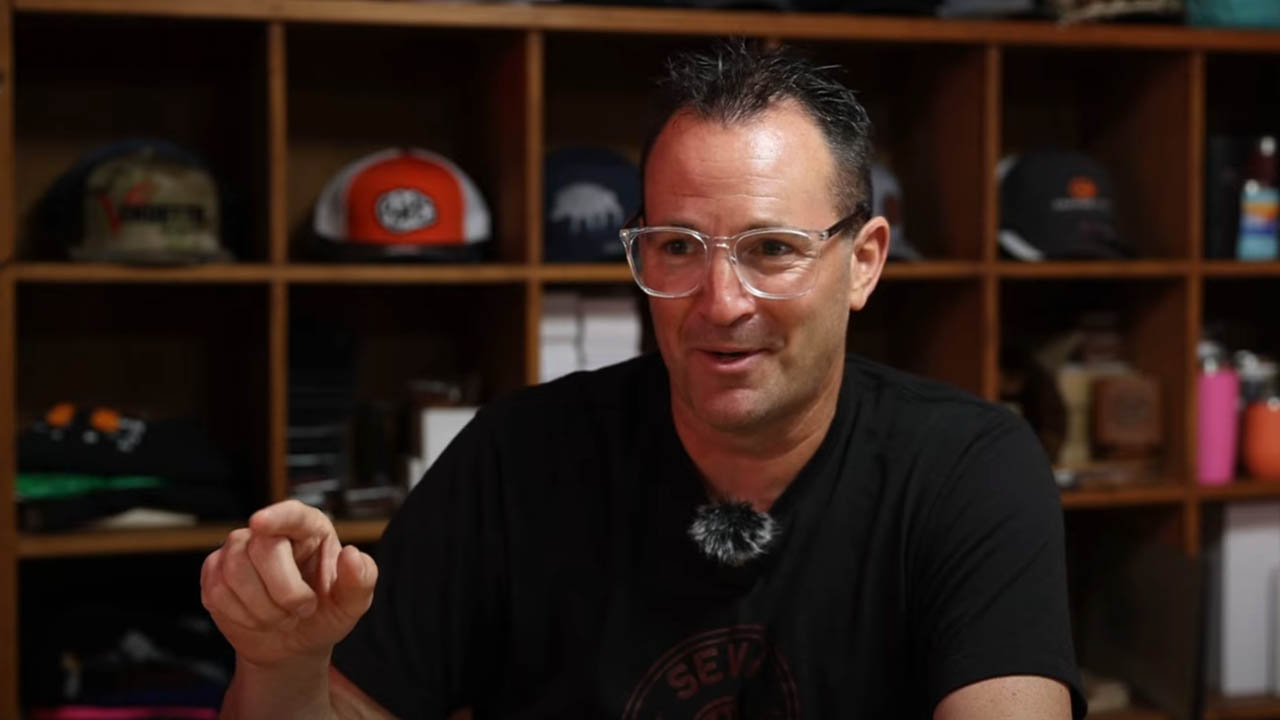
If you want to grow a print shop, Mark Coudray’s 53 years in the industry point to four fundamentals: solve a specific problem, attract customers worth keeping, build repeatable operations, and stay connected to your market.
The tools have changed dramatically. Those fundamentals haven’t.
Coudray started his first company at 19 with a few hundred dollars in his parents’ garage. He earned a degree in printing engineering while running the business and says he later grew the company from about $200,000 to $4.5 million in roughly 18 to 19 months.
There were no computers, email, spreadsheets, social media, or modern shop management systems. Everything was analog.
Starting a print shop today is much easier from a technology standpoint, Coudray says. It is also much more competitive. His experience suggests that technology can help a good business operate better, but it cannot replace the decisions that make the business worth choosing in the first place.
To Grow a Print Shop, Start With the Problem You Solve
Coudray’s first question for someone starting a print shop today would not be which press to buy, what decoration method to offer, or which software to use.
It would be: What problem are you trying to solve?
That distinction matters.
A shop that defines itself simply as a business that prints shirts can quickly find itself competing with dozens of businesses offering something similar. Coudray argues that the stronger approach is to identify a problem or market specific enough to create what he calls a “moat” around the business.
That could mean becoming known for school spiritwear, athletic programs, streetwear, corporate uniforms, event merchandise, or another defined area.
The objective is to give customers a reason to remember the shop beyond price.
Successful print shop growth starts when the market develops a consistent story about the business. If customers describe your shop the same way you want to describe it, your positioning is beginning to work.
A useful exercise is to ask:
- Which customers do we serve particularly well?
- What problem do they repeatedly bring us?
- Why do they choose us instead of another decorator?
- What do we want people saying about our shop when we aren’t in the room?
A print shop can differentiate itself by becoming known for solving a specific problem for a specific customer rather than trying to win every available order.
Do Not Grow A Print Shop Around Price Shoppers
One of the biggest mistakes Coudray sees is shops taking orders from almost anyone who walks through the door.
The warning sign is often a question like, “What’s your best price?”
Those customers may generate an order, but Coudray argues that price shoppers often provide little long-term value. If price was the main reason they chose the shop, another low price can just as easily pull them somewhere else.
That creates a difficult cycle.
The shop spends time quoting, onboarding, communicating, producing, and resolving questions for a customer who may never return. Then the sales process starts again with somebody new.
Coudray recommends thinking about customers more like appreciating assets.
His own customer-value model assigns increasingly greater value to customers who remain with a business for multiple years. The specific numbers come from Coudray’s experience and analysis, but the underlying point is straightforward: customer relationships have an opportunity to compound.
A repeat customer already knows your quality, communication, turnaround expectations, and ordering process.
That relationship can lead to another uniform order, another sports season, another company event, another online store, or a referral to somebody else who needs the same service.
That changes how you think about growing a print shop.
Instead of asking only, “How much is this order worth?” it becomes useful to ask, “Is this the kind of customer we can still be serving three or five years from now?”
More orders do not automatically create a stronger business. The right customers can.
Build Consistent, Predictable and Repeatable Print Shop Operations
Getting better customers solves only part of the growth problem.
To actually grow a print shop, you still have to deliver.
Coudray describes one of the biggest operational bottlenecks in print shops through a simple framework he calls CPR: Consistent, Predictable and Repeatable.
Consistent means the shop can execute the same process reliably.
Predictable means the customer receives the experience and result they expect.
Repeatable means the business can reproduce that experience three days, three months, or three years later.
That requires documented processes.
Consider a typical decorated apparel order:
Quote → artwork → approval → stock → work order → production → quality check → fulfillment
A breakdown anywhere in that chain creates additional work.
Coudray points to familiar shop-floor problems: missing paperwork, orders that cannot be located, incomplete stock arriving, jobs reaching production without everything needed, or quantities coming up short after a setup has already been torn down.
One mistake can mean setting up the job again.
That costs something more limited than ink, thread, film, or garments.
It costs time.
And as Coudray puts it, time is the one resource you cannot replace.
This is why improving print shop operations matters so much when a business starts growing. Adding more orders to an inconsistent workflow can multiply existing problems.
Standard operating procedures give the team a documented way to handle recurring work. Shop management technology can make those processes easier to track and automate, but the process itself still has to make sense.
The objective is not simply to work faster.
It is to prevent avoidable work from happening in the first place.
Grow A Print Shop Through Reputation, Connection and Repeat Customers
Coudray also sees a major growth opportunity outside the production area: staying connected.
His advice is to create content around the solution the business provides and build a reputation that other people can verify.
That might happen through Instagram, Google reviews, customer testimonials, referral programs, third-party review platforms, or simply staying visible to existing customers.
The platform matters less than the outcome.
Coudray describes a simple progression:
Connected → top of mind → referred
When somebody asks a customer, “Do you know anyone who does great shirts?” you want your shop to be the first business they remember.
That starts with delivering a strong experience, but it continues after the order leaves the building.
A screen printer specializing in schools might regularly showcase spiritwear programs, fundraising ideas, team stores, and seasonal campaigns.
An embroidery shop serving local companies might share uniform programs, employee onboarding kits, branded outerwear, and repeat-order ideas.
The content reinforces what the business wants to be known for.
Reputation then strengthens that positioning.
Instead of having to tell a prospect how good your shop is, reviews, referrals, and customer stories allow other people to make the case for you.
That creates a much stronger foundation for print shop marketing than constantly chasing strangers with another discount.
What 53 Years of Print Shop Growth Comes Down To
The printing industry Coudray entered looks very different from the one shop owners operate in today.
Software can manage quotes. Online stores can collect orders. Supplier integrations can help shops manage blank products and inventory. Social media can put a small decorator in front of customers without a traditional advertising budget.
But the underlying business questions remain remarkably similar.
To grow a print shop, solve a problem people value, attract customers worth keeping, create consistent and repeatable operations, and stay connected long enough for those relationships to grow.
Technology can make every part of that process easier to manage.
It cannot decide what your shop should stand for.
The shops positioned for long-term growth are not necessarily the ones willing to take every order. They are the ones customers remember, trust, return to, and recommend.