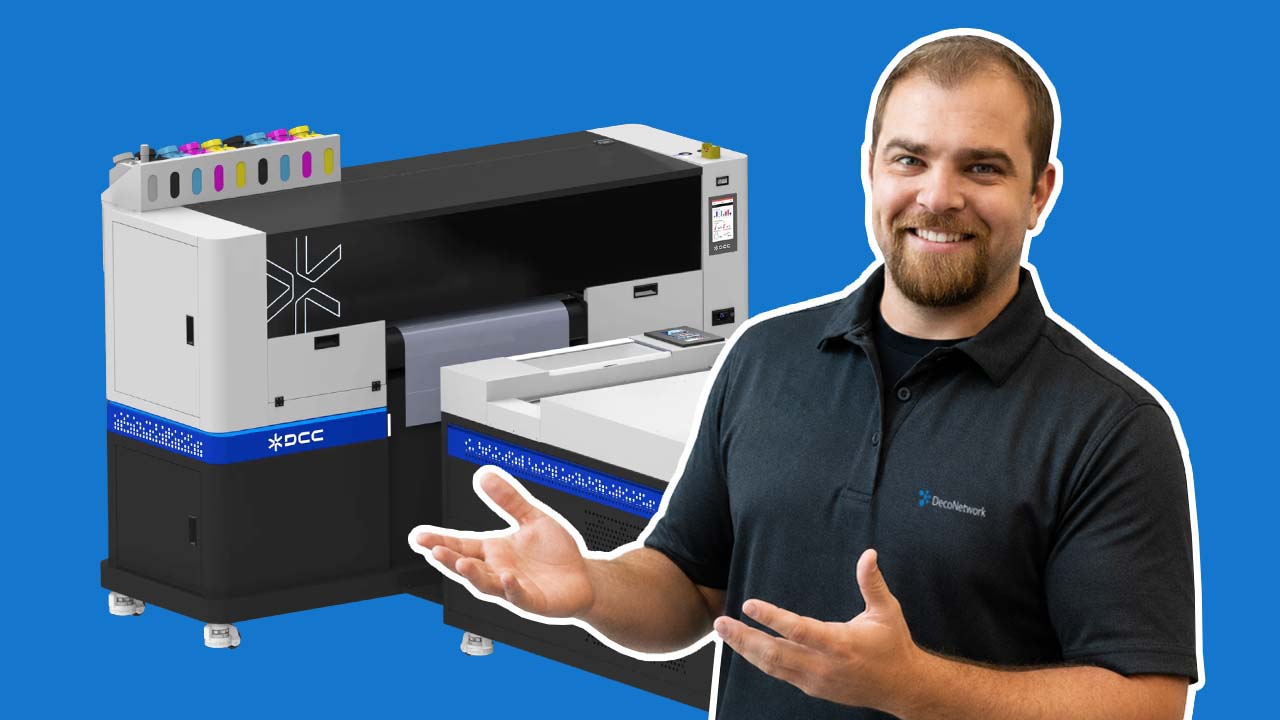
The Neo Flex F-51350+ Pro gives garment decorators access to traditional powdered DTF production and a newer powderless DTF workflow through one flexible printing platform. Print shops can use traditional adhesive powder when durability is the priority or move toward powderless production for a softer hand, less powder handling and a quieter workspace.
That flexibility matters because apparel printing businesses rarely produce one type of order. A shop may need durable transfers for workwear one day and softer graphics for premium retail apparel the next. Instead of forcing every job through the same process, the Neo Flex gives decorators more control over how each transfer is produced.
How Powderless And Traditional DTF Work In One System
Traditional direct-to-film printing uses a familiar process. The printer lays down CMYK and white ink onto PET transfer film, adhesive powder is applied to the printed image, and the transfer passes through a curing system. Once cured, it can be heat-pressed onto a wide range of garments and textiles.
Powderless DTF removes the separate adhesive powder application from that workflow. DCC’s solution uses specially formulated inks that create adhesion as part of the printed transfer. The print still needs to be dried, cured and applied with a heat press, but operators no longer need to coat it with loose powder.
DCC has positioned the Neo Flex platform as a bridge between the two production methods. A shop can continue using the established powdered DTF process while introducing powderless transfers where they make sense.
This is particularly valuable for businesses that are interested in powderless DTF technology but do not want to abandon a traditional workflow that already produces reliable results. It also reduces the risk of investing in a machine that supports only one production path.
The purpose of the system is not simply to replace powder. It is to give print shops another way to match the transfer to the garment, customer and intended use.
Powderless vs Traditional DTF: Which Is Better?
Neither method is automatically better for every order. The right choice depends on what the customer values most.
Benefits Of powderless DTF Printing
One of the most noticeable benefits of powderless DTF is the softer hand. Traditional adhesive powder creates a layer between the printed design and the fabric. By integrating adhesion into the ink system, the powderless process can produce a lighter, more flexible print that feels less heavy on the garment.
That can make powderless DTF a strong option for:
- Fashion apparel
- Lightweight shirts
- Premium merchandise
- Large full-front graphics
- Garments where softness and comfort matter
Removing loose powder can also create a cleaner production environment. Operators do not have to manage airborne powder particles, powder residue or the same level of cleaning around the shaker system.
Powderless production may also reduce machine noise because the powder shaker is not operating. For busy shops where equipment runs throughout the day, a quieter
Benefits Of Traditional Powdered DTF
Traditional DTF remains widely used because it is familiar, versatile and proven across many garment types. Established shops may already have tested curing settings, heat-press instructions and quality-control standards for their powdered transfers.
It may remain the preferred workflow for:
- Workwear
- Uniforms
- Frequently washed garments
- High-contact applications
- Customers who prioritize durability
- Orders with previously approved production settings
Durability should be considered carefully when comparing the two methods. During the Neo Flex product demonstration, DCC reported more than 20 washes for its powderless transfers, compared with approximately 40 to 50 washes for the powdered version at that stage of testing.
Those numbers should not be treated as a universal guarantee. Wash performance can change based on the garment, ink, film, curing temperature, press settings, detergent and care instructions. Shops should test both workflows using the actual blanks and applications they plan to sell.
The advantage of a dual-workflow DTF printer is therefore not that powderless printing makes traditional DTF unnecessary. It is that decorators can choose softness, cleanliness or established durability according to the job.
Neo Flex F-51350+ Pro Speed And Production Features
The Neo Flex F-51350+ Pro is a commercial 24-inch DTF printer built for print shops that need more than an entry-level desktop system.
DCC currently lists the printer with four Epson I3200-A1 printheads: two for CMYK and two for white ink. Its published production speeds are:
- Up to 16.5 square metres per hour in 6-pass mode
- Up to 11 square metres per hour in 8-pass mode
- Up to 90 linear feet per hour in 6-pass mode
- Up to 60 linear feet per hour in 8-pass mode
The faster 6-pass setting supports higher production volume, while the 8-pass setting is intended for jobs requiring greater detail. Actual daily output will still depend on artwork layout, garment demand, film utilization, curing, finishing and operator efficiency.
White Ink Management And Preventive Maintenance
White ink management is one of the most important parts of operating a DTF printer. White pigments can settle and create circulation or printhead problems when equipment is not maintained correctly.
The Neo Flex includes automatic white ink circulation, along with automatic capping and wiping systems. These features are designed to improve ink consistency, keep printheads clean and reduce avoidable downtime.
They do not make the printer maintenance-free. Operators still need documented cleaning routines, controlled room conditions and regular inspection. However, automated maintenance features can reduce how much manual intervention is required during normal production.
Integrated Film Handling And Curing
The system includes automatic roll-out and film take-up, along with sensors and tension controls intended to keep the PET transfer film aligned. Stable film movement helps reduce wrinkles, tracking problems and wasted material during longer production runs.
For traditional DTF, the accompanying dryer uses an automated powder dispenser and shaker to create consistent adhesive coverage. It also includes controlled heating, winding and filtration features as part of the production workflow.
DCC recommends a working environment between 61°F and 81°F with 40% to 60% humidity and no condensation. The company lists a minimum working area of approximately 11 by 12 feet, so buyers need to account for the printer, dryer, operator access, film handling and maintenance space.
RIP Software Built Around Production
The Neo Flex ecosystem includes DCC RIP software for managing print jobs. Production features include artwork nesting, color management and print queue control.
Efficient nesting is especially important for DTF businesses because poor artwork placement wastes film and reduces the value of each printed roll. A production-focused RIP can help operators combine jobs, organize gang sheets and use the available film more efficiently.
The printer, dryer, ink, film, powder and software are designed as one system. That can simplify troubleshooting compared with a setup assembled from unrelated machines, software and consumables.
Is The Neo Flex F-51350+ Pro Right For Your Print Shop?
The Neo Flex F-51350+ Pro will be most relevant to businesses that need commercial output and want the flexibility to explore powderless DTF without immediately leaving traditional production behind.
Potential users include:
- Screen printers adding full-color short runs
- Embroidery shops expanding into printed apparel
- Decorators bringing outsourced DTF transfers in-house
- Existing DTF businesses preparing for higher volume
- Shops serving both fashion and commercial clients
- Transfer suppliers offering different finishes and performance levels
Before purchasing any commercial DTF printer, business owners should look beyond maximum print speed. A machine is only productive when the entire workflow operates reliably.
Ask the supplier about:
- Installation and operator training
- Powderless conversion requirements
- Consumables for each production method
- Local parts and technical support
- Maintenance schedules
- Recommended ventilation
- Warranty coverage
- Current wash-testing results
- Electrical and environmental requirements
- Expected cost per square foot or transfer
Request samples made through both workflows. Use artwork that includes fine lines, small text, gradients, solid areas and a strong white underbase. Press the transfers onto the cotton, polyester and blended garments your customers actually order.
Then compare:
- Color accuracy
- White opacity
- Fine-detail reproduction
- Stretch and recovery
- Hand feel
- Edge definition
- Pressing requirements
- Wash resistance
- Production time
- Total consumable cost
A sample that looks impressive at a trade show may behave differently after repeated washing or when applied to the blanks used in your shop. Testing with real products gives you better information than judging the equipment only by its published specifications.
Takeaway: Neo Flex F-51350+ Pro Matches Your Process
The Neo Flex F-51350+ Pro stands out because it gives apparel decorators more than one path forward. Traditional powdered DTF supports familiar production methods and established durability, while powderless DTF offers the potential for softer transfers, less powder handling and a cleaner, quieter workspace.
For business owners and DecoNetwork members, that flexibility can be more valuable than choosing one method and declaring it the future of every DTF order.
The right DTF printer should support the work your shop produces today while giving you room to respond to changing customer expectations. Before investing, test both processes, confirm the current machine configuration and calculate the full cost of production.
Powderless DTF may be an important next step for apparel printing, but traditional DTF still has a clear role. With the Neo Flex F-51350+ Pro, shops do not necessarily have to choose between them.